Hello! 👋
Welcome to the Dala Dispatch by the Dala Institute.
–
Dala has been filled with exciting events and meaningful engagements, bringing together knowledge, collaboration, and fresh perspectives. Read through to learn more about recap of the events, key takeaways, and our experiences!
–
SISET's Mission to South Sulawesi and Jakarta
Dala Institute has been working with the UNEP Copenhagen Climate Centre as an implementing partner for the Socially Inclusive Sustainable Energy Transition (SISET) project in Indonesia. This initiative aims to support sub-national governments, particularly in West Java and South Sulawesi, in advancing their low-carbon energy transition plans by incorporating socio-economic aspects, fostering consensus-building and collaboration, and maximising local socio-economic co-benefits to achieve an inclusive and sustainable energy transition.
With a focus on developing renewable energy sources, especially wind and solar, the project will provide technical assistance and capacity-building to stakeholders, offering actionable recommendations to improve socio-economic and developmental opportunities tied to the energy transition. Through this effort, SISET aims to equip policymakers in the sub-national level with the knowledge and skills to adopt and utilise the ‘just transition’ framework in energy planning, monitoring, and implementation, while ensuring effective coordination across sub-national and national levels.
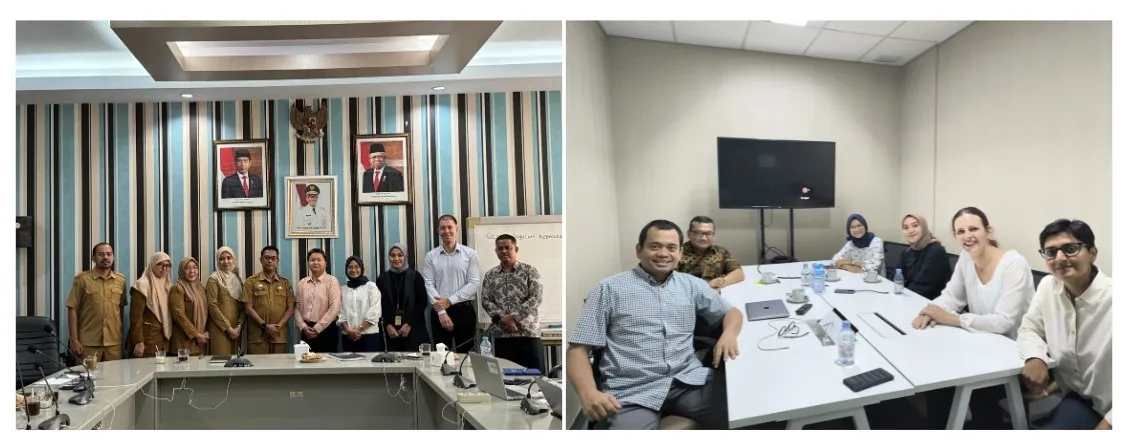
The UNEP-CCC Team and Dala Institute Team (including Balgis Inayah and Nitia agustini kala ayu ) had the opportunity to meet with national and provincial stakeholders during a mission to Jakarta and South Sulawesi Province. During the mission, the team found out that it is crucial to strategically plan and link the energy transition to economic development by stimulating demand and creating productive use and income opportunities. This involves fostering economic diversification and exploring sectoral opportunities, particularly by establishing linkages between the regional development plan (i.e., RPJMD) and the regional energy plan (i.e., RUED). This holistic approach aims to achieve multiple Sustainable Development Goals (SDGs) by ensuring that the energy transition not only addresses environmental concerns but also contributes to economic well-being, job creation, and improved livelihoods for communities.
Sharing is Caring : Feminist Participatory Action Research
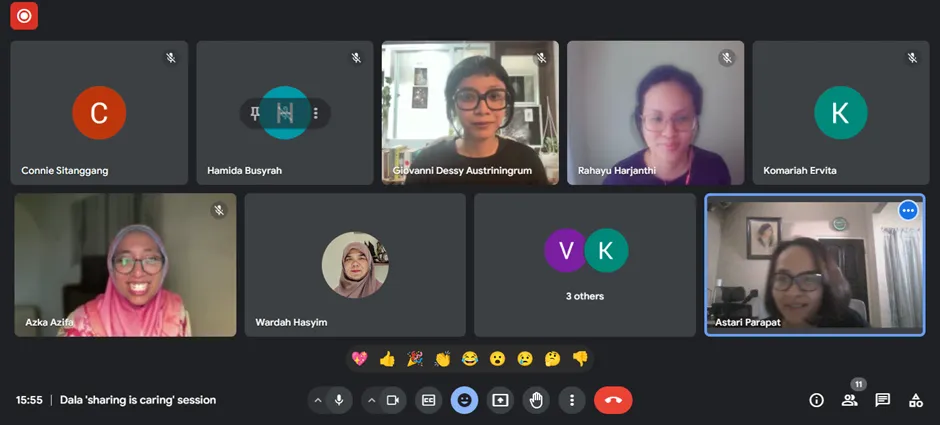
In an internal session of ‘Sharing is Caring’, Dala staff members Rahayu Harjanthi (Ayu) and Giovanni Dessy Austriningrum (Gio) shared their experience using Feminist Participatory Action Research (FPAR) methods in Guardians Under Pressure: Southeast Asian Indigenous Environmental Defenders and Civic Spaces in the Context of Climate Change Mitigation research project. By looking at cases where rural communities and environmental defenders are bearing the costs of upstream extraction for the energy transition agenda, FPAR challenges politics of knowledge production and distribution, as well as unequal power relations that shape realities of affected communities, environmental movements, and civic spaces. Some intersectional social dimensions are considered, such as gender, indigeneity, and class.
“It’s creative, complex, and challenging”, said Ayu. “Critical engagement, negotiations, and reflections of reflexivity are something we reiterate throughout the project stages”. For instance, the research team engaged and consulted with social-environmental movement actors in Indonesia to discuss the case study locations. The team is currently preparing a zine series to share and discuss current social and political contexts with local communities in the field as a part of their initial ethnographic visit. “Based on the initial study and interviews we conducted, we are making efforts to ensure that our materials will be accessible so that people from different groups can participate meaningfully in the FPAR activities.”
Indonesia Sustainable Energy Week 2024
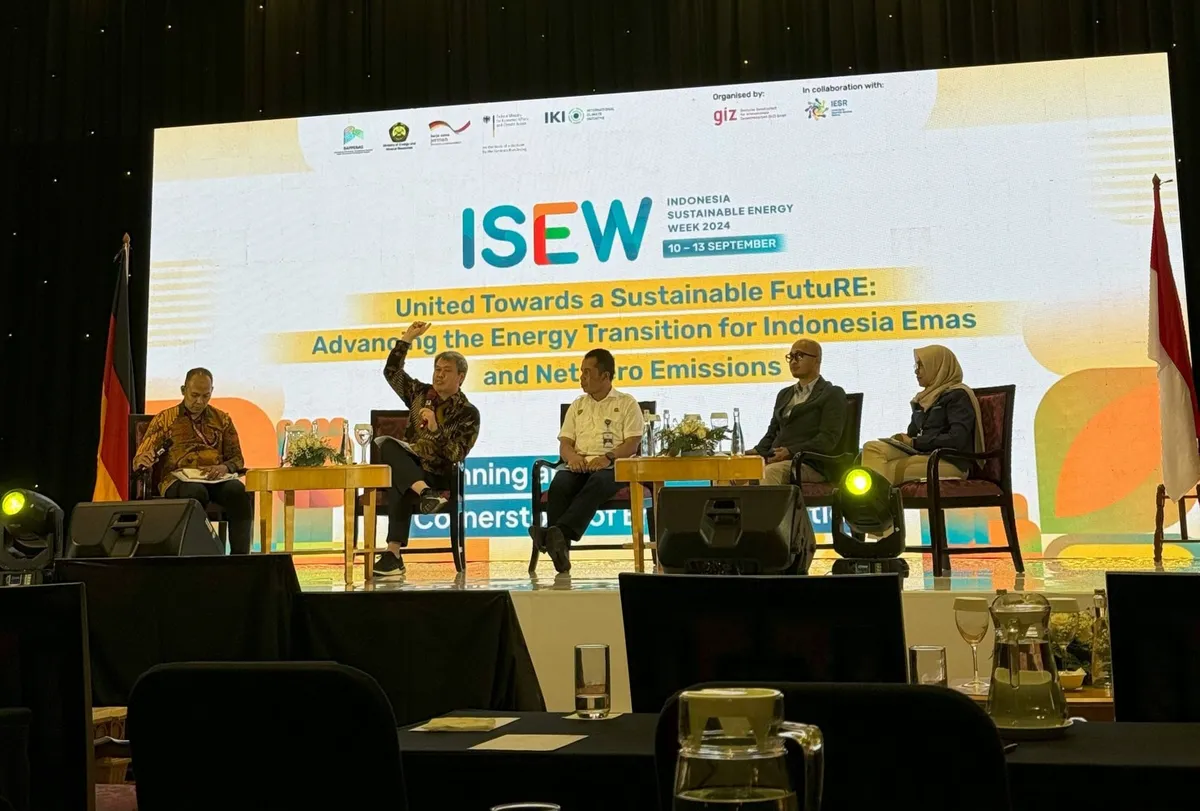
Dala Researchers/Evaluator - Nitia agustini kala ayu (Nitia) and Balgis Inayah (Agis) had the opportunity to participate in Indonesia Sustainable Week (ISEW) 2024, hosted by Bappenas and Ministry of Energy and Mineral Resources (MEMR) and organised by GIZ and IESR. The event hosted high-level discussions, fostering collaboration on both global and national energy transition efforts. ISEW 2024 emphasises on the collaborative efforts required between various stakeholders—regional governments, business associations, and global partners—to foster a low-carbon economy. These collaborations are essential to overcoming the systemic challenges involved in shifting away from carbon-intensive energy sources and promoting sustainable practices.
“I am delighted to have participated in this energy transition event, which provided valuable insights into the latest initiatives, regulations, and perspectives from various stakeholders. As I am currently working on the Socially Inclusive and Sustainable Energy Transition (SISET) project, focusing on research and technical assistance related to the role of provincial stakeholders in renewable energy. This event has deepened my understanding of the critical need for provincial government capacity building and active participation in energy planning. Additionally, it highlighted the importance of collaboration between the Ministry of Home Affairs, BAPPENAS, and the Ministry of Energy and Mineral Resources in sharing knowledge and involving local agencies in the development of renewable energy initiatives. This experience has been both informative and inspiring for my ongoing work.”, Nitia said.
“I was really eager to attend this year's ISEW event after participating online last year. My work on energy transition and just transition projects at Dala made this event a valuable opportunity to connect with key stakeholders from national and subnational levels, including NGOs, think tanks, and the private sector. The discussions provided crucial insights into the latest developments in the energy transition agenda and clarified the roles of national and subnational governments in planning and implementing an inclusive and sustainable energy transition. This experience will significantly contribute to the projects I am involved with at Dala.", said Agis.
–
Subscribe to Dala Dispatch Newsletter and make sure to follow our Linkedin and Instagram account (@dalainstitute) for insightful analyses and updates on events like these and more!
Comments
No comments yet. Be the first to respond.
Enter your email and we will send a sign-in link so you can comment.