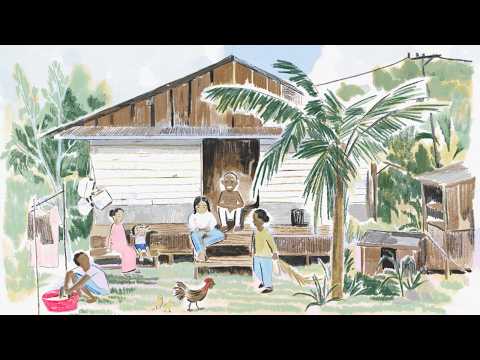
Women and Marginalized Communities in Coal Transitions (Case Study in East Kalimantan)
A qualitative case study that examined how coal mine closure reshaped everyday life, livelihoods, and intersecting inequalities for women and marginalised groups in Kerta Buana, East Kalimantan, and what these dynamics revealed about the conditions for a just post-mining transition.
Background
In order to successfully manage a Just Transition in the coal regions, it was important to generate a common understanding
among stakeholders in the region of what impacts phasing out mining and carbon-intensive industries had on women and marginalised groups, and to develop policies and planning that were gender-responsive. The implications of gender and structural change in response to decarbonisation and deep structural changes for regional economies and labour markets had received little attention.
The key objective of this study was to conduct an in-depth impact assessment of intersectional gender roles in coal transition regions of East Kalimantan. Empirical examples from the regions were examined, focusing on research questions relevant to each. Partners were encouraged to propose one or both regions as case studies and provide a rationale for their selection.
The key questions that guided this research were:
- How did gender roles influence labour dynamics in coal economies, and to what extent was this being taken into account for post-coal transition planning?
- How did access to resources in Indonesian coal phase-out communities shape women’s livelihood and mobility?
- How did women and marginalised groups participate in decision-making processes during coal mine closures in Indonesia’s energy transition?
Approach
The study was conducted in three phases: a rapid literature review mapping gender, coal economies, and just transition in Indonesia and internationally; a Local Networking Activity (LNA) between April and June 2025 comprising six online consultations and an in-person scoping workshop in Samarinda to validate research questions and select the case study site; and primary qualitative fieldwork in August–September 2025. Fieldwork included 34 in-depth key informant interviews using a life-history inspired approach, four focus group discussions with 42 participants (predominantly women), participant observation, and a group interview with company representatives — engaging 76 total participants across diverse social positions. Analysis drew on feminist political economy, feminist political ecology, intersectionality, and decolonial scholarship, organised around four dimensions of justice: redistribution, recognition, representation, and reparation.
Results
The study produced three empirical findings. First, post-mining land and resource access was uneven, conditional, and risk-laden — reaching a small percentage of the village population through opaque allocation processes, while the costs of farming degraded land fell entirely on households. Second, post-mining livelihoods reproduced and deepened intersectional vulnerabilities rather than resolving them, pushing women, landless households, migrants, older workers, and sex workers towards survival strategies that were precarious, dangerous, or legally exposed. Third, a politics of meaning-making — framing corporate obligation as generosity and normalising constrained futures — systematically foreclosed accountability claims and collective action. The report concluded with six concrete recommendations addressed to government, mining companies, and development partners, grounded in the four dimensions of justice and the specific conditions documented in the case study site.
In this research project, the Dala Institute team was supported by Dewi Sekar Farrasyifa, who served as a Research Assistant.
Publications
Documents
What Can an Old Mine Tell us About Just Transitions? Gendered and Intersecting Inequalities After Coal
Intersecting Inequalities and Post-Mining Transition
Videos
Bagaimana Penutupan Tambang Batu Bara Berdampak pada Kehidupan Perempuan dan Kelompok Marjinal?
Video ini meringkas temuan riset kualitatif Dala Institute for Environment and Society tentang dampak penutupan tambang batu bara terhadap kehidupan perempuan dan kelompok marjinal di Kerta Buana, Kalimantan Timur. Riset ini menggunakan pendekatan interseksionalitas untuk menelusuri bagaimana ketimpangan berlapis membentuk pengalaman warga dalam menghadapi transisi pascatambang.
View source page