By Rahayu Harjanthi (Senior Researcher at Dala Institute)
Research shouldn’t begin with taking—it should begin with giving.
This conviction guided our 18-month feminist participatory action research (FPAR) journey with environmental defenders across Indonesia, where zines became our first act of solidarity and radical listening rewrote our methodology.
Yet my reflections began with a colleague’s transformative words: "This project has restored my faith in research. Now that I’ve experienced this approach, I wouldn’t want to do it any other way."
That powerful statement came from one of our young researcher partners in the Philippines, describing the feminist participatory action research methods we employed in our project. Their words captured the transformative potential of FPAR—not merely as a methodology, but as a means of empowering communities and reshaping how research is done.
The Guardians Under Pressure FPAR project, funded by IDRC, addresses the growing threats faced by environmental defenders and shrinking civic spaces in Southeast Asia, especially in regions where climate change mitigation initiatives are reshaping access to natural resources. By informing policy and amplifying marginalized voices, the project aims to protect those on the frontlines of environmental justice.
This collaboration brings together the Dala Institute and Auriga Nusantara (Indonesia), the Legal Rights and Natural Resources Center (Philippines), and the Regional Center for Social Science and Sustainable Development (RCSD) at Chiang Mai University (Thailand). Using ethnographic case studies, this research covers 6 case studies locations in Indonesia, Philippines and Thailand. The case studies are designed to generate insights based on FPAR activities with a particular emphasis on intersectional analysis and community-rooted strategies. These insights will inform existing frameworks, foundations, and protection mechanisms for environmental defenders through multi-scale discussion processes.
While this reflection focuses on my experience in Indonesia, our Philippine colleague’s testimonial is a fitting starting point. It highlights a stark contrast to my own initial skepticism toward the approach.

Anthropologists have long argued that PAR is not inherently emancipatory—its transformative power depends on who controls the process and whether it challenges or reproduces power structures. While some celebrate its potential for decolonising research, others warn against its instrumentalisation in development. For example, Kapoor (2005) state that when adopted by NGOs and development agencies, PAR often becomes technocratized, losing its radical edge while Cooke and Kothari (2001) argues that funding requirements may turn PAR into a project-based exercise rather than a long-term political process. Furthermore, despite claims of equality, anthropologists show that PAR can reproduces hierarchies. Outside researchers (even with participatory intentions) may still dominate framing and analysis (Briggs, 2005).
In an early conversation with a friend—an anthropologist and activist—she voiced a sharp critique: "Why should communities shoulder the burden of yet another process when they’re already the ones being exploited?" Her concern struck a nerve. We were speaking about grassroots environmental defenders fighting to protect their land and water from powerful extractive industries. These were communities already burdened by injustice, and I was preparing to ask them to participate in yet another research process.
Her questions lingered: "Aren’t we the privileged ones in this dynamic? Aren’t we the ones with the resources and power to drive change? Why are we asking them to do the work?"
These challenges forced me to confront the ethical tensions inherent in participatory methods. Was FPAR truly a tool for empowerment, or just another extraction—this time of time and labour?
That was a wake-up call.
I realised this project needed to fundamentally reject extraction - not just in method but in its very economy of knowledge. If we weren’t actively redistributing our institutional resources and privileges back to these communities, we’d simply be replicating the same colonial dynamics we sought to challenge, just with better intentions.
The literature offered a way forward. Davis and Craven (2023) reminded me that feminist scholarship isn’t just about studying communities but placing our academic tools - funding, platforms, legitimacy - at the service of their struggles.
Activist scholarship takes this further. As Saxton (2015) and Hale (2006) argue, true movement-aligned research requires scholars to wield their privilege as leverage: sharing grant money, opening institutional access, and crucially, following rather than leading. It’s about turning academia’s extractive machinery on its head - using our research funds and publishing platforms to amplify rather than appropriate grassroots knowledge.
This became my non-negotiable framework. The question was no longer just “how do we study this?” but “how do we ensure our scholarships materially strengthen their fight?” With that commitment, I began.
Redirecting Resources: From Extraction to Solidarity
The next critical step was asking: To whom should we redistribute these resources? Whose needs should guide our work? While our research focused on "environmental defenders," this broad category encompasses journalists risking their safety, overworked CSO staff, underfunded lawyers, and grassroots activists facing violent repression. There could be no presumptions about their needs—only dialogue could reveal how our academic privileges might truly serve their struggles.
We began with listening. Through dozens of interviews across Indonesia’s defence ecosystem, we asked not what data we could collect but what support they needed: Which battles required documentation? Whose voices were being systematically erased? Where could research funding make the most material difference?
This wasn’t consultation. It was the deliberate act of relinquishing control.Participatory research agenda setting with the local research team using a timeline chart.
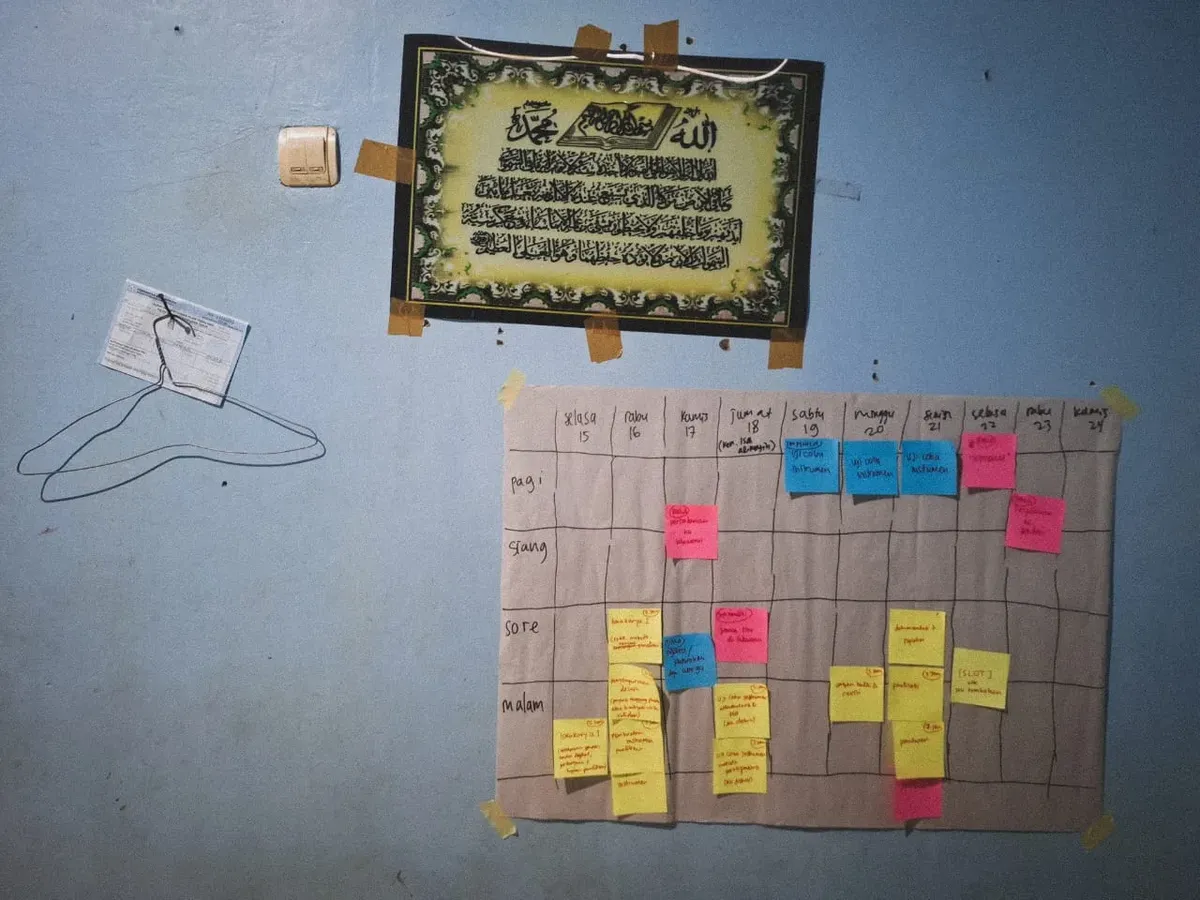
The power of this approach became clear during our first collaborative workshop. When defenders identified geothermal projects in East Nusa Tenggara and nickel mining in a small island in Southeast Sulawesi as priority cases, they weren’t merely suggesting field sites—they were directing our resources toward struggles where research could strengthen resistance. They made their criteria clear: center Indigenous and customary land defenders, amplify the voices of coastal communities on the frontlines of climate change, and expose how “green” extractive projects perpetuate violence under the guise of sustainability.
This was scholar-activism in practice. We weren’t just studying oppression—we were letting those most affected determine how institutional resources could be weaponized against it.
Listening also revealed something crucial: the ethical necessity of refusal. I arrived with intellectual curiosity, eager to document every detail of these struggles. But I learned, through dialogue, that my desire for "complete data" could easily become another form of extraction. Some defenders withheld information—not out of distrust, but because disclosure could endanger their survival.
The environmental defenders we interviewed at the national level warned that some data is dangerous to disclose. Some methodologies, which I initially thought were interesting to include in the catalog of method options we would propose to prospective interlocutors, turned out to potentially document and reveal data that could serve as intelligence for their opponents.
This was what scholars term ethnographic refusal: the deliberate decision to withhold knowledge to protect a community (Ortner, 1995). It’s not rejection—it’s resistance. And it forced me to confront some hard truths: not all stories are mine to tell; some data is too dangerous to document; and research is never neutral. In fact, mining companies routinely weaponize academic studies to justify displacement and extractive expansion.
This was the ultimate test of our commitment to redistribute power rather than knowledge. We now had to repurpose our epistemic expectations—recognizing that the most ethical research might sometimes mean producing less data, not more.
Putting Solidarity First: The Practice of Giving Before Asking
True commitment to non-extractive research demanded breaking academia's most stubborn habit: our reflex to ask before giving. This reckoning came as we prepared for our first field engagement. The original plan was straightforward—arrive in the community and request their participation in our research. But I realized with growing unease: We were about to make our very first interaction an ask.
That couldn’t be our starting point.
The insight came through listening—and through my activist-anthropologist friend’s experience in one of our case study sites. Unlike typical researchers, she hadn’t arrived empty-handed; her team conducted a study dissemination, bringing findings to the community rather than extracting them. They conducted legal, political, and economic analyses of the case occurring in that location; a form of knowledge needed by the community that could be provided by a group with academic privilege like theirs. The difference in reception was stark: they were welcomed as allies, not tolerated as intruders.
This became our model. We pivoted to identify what we could give first. Our planned socio-political literature review—a task that leveraged our academic privileges of institutional access and analytical training—presented the perfect opportunity. The question shifted from "How do we conduct this analysis?" to "How can we transform this into something of immediate value for those we hope to partner with?"
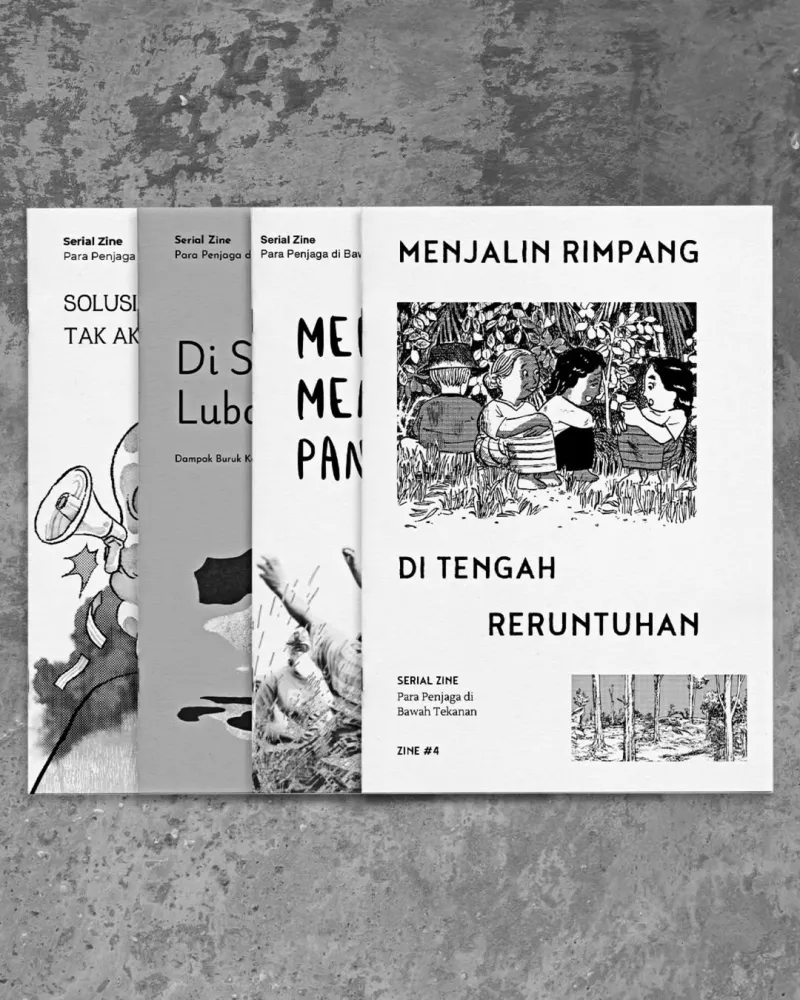
We made three critical decisions. First, we reshuffled our project timeline, moving the analysis to the start. Second, we redesigned the output: rather than an academic report, we created an accessible zine—a visually rich, self-published booklet for popular education. Third, we absorbed the unbudgeted costs, even though it strained our resources.
This radical reprioritization was only possible because our donor recognized the value of truly participatory methods. When we presented our pivot—explaining how giving before asking would fundamentally alter the research relationship—they embraced the disruption as ethical rigor rather than poor planning. Their flexibility with timelines and willingness to trust our on-the-ground insights became the invisible scaffolding of this work.
The impact was real. Yes, our project manager probably felt overwhelmed as we upended our carefully crafted Gantt Chart. We fell behind schedule. But this was the price of practicing what we preached.
The zines went beyond simply making information accessible. They took an explicit stance, aligning with the communities' narratives, naming power imbalances, and validating resistance. Unlike “neutral” research outputs, these zines became a tangible declaration of solidarity.
The Work Continues: Reflexivity as an Ongoing Practice
So we moved forward with the FPAR—but the deeper work of addressing needs and redistributing privileges never stopped. Eighteen months in, what began as a research project has transformed into something far more dynamic.
The unplanned capacity-building program became our next opportunity for meaningful giving. When we realise that we had to provide capacity-building on how to do research for them we also asked, "What other skills would strengthen your struggle?" their answers came: literacy, social media strategy, agrarian study, restorative economy, and conflict resolution. Even though we were technically only obliged to provide the research capacity-building, we saw a chance to respond to their needs beyond that. So we shifted again. We developed a digital course format to make these resources accessible, reduce delivery costs, and create lasting, reusable tools.
This was where our privilege could be most impactful—curating and delivering knowledge that communities could use on their own terms. While connectivity remained a challenge in remote areas, the program reached our interlocutors. We followed up with a second field visit to support the refinement of community-led research designs, instrument development, and pilot testing.
Now, watching communities conduct independent data collection using instruments they design, I see our original vision taking shape. The digital courses weren’t just an output—they became living proof of what scholar-activism should be: institutional privileges converted into community tools.
As we prepare for the upcoming analysis workshop, I’m reminded that true participatory research isn’t a method you execute but a commitment you keep renewing. Every spreadsheet, every training module, and every flipped timeline is another chance to ask: How can our resources serve your power today?
*My heartfelt thanks to my colleagues at Dala Institute involved in the GUP project and my special thanks to Jeydah Marie Cawed (LRC) and Atinna Rizqiana (CELIOS).
References
Briggs, J. (2005) ‘The use of indigenous knowledge in development: problems and challenges’, Progress in Development Studies, 5(2), pp. 99–114. Available at: https://doi.org/10.1191/1464993405ps105oa.
Cooke, B. and Kothari, U. (2001) Participation: The New Tyranny? London: Zed Books.
Davis, D.-A. and Craven, C. (2023) Feminist ethnography: thinking through methodologies, challenges, and possibilities. Second edition. Lanham: Rowman & Littlefield.
Hale, C.R. (2019) Engaging Contradictions: Theory, Politics, and Methods of Activist Scholarship. University of California Press. Available at: https://doi.org/10.1525/9780520916173.
Kapoor, I. (2005) ‘Participatory Development, Complicity and Desire’, Third World Quarterly, 26(8), pp. 1203–1220.
Ortner, S.B. (1995) ‘Resistance and the Problem of Ethnographic Refusal’, Comparative Studies in Society and History, 37(1), pp. 173–193. Available at: https://doi.org/10.1017/S0010417500019587.
Saxton, D. (2015) ‘Ethnographic movement methods: anthropology takes on the pesticide industry’, Journal of Political Ecology, 22(1). Available at: https://doi.org/10.2458/v22i1.21114.
Comments
No comments yet. Be the first to respond.
Enter your email and we will send a sign-in link so you can comment.