Written by: The ‘People-Centred Energy Transition for Socio-Economic Resilience’ team* as part of the project team’s regular reflection series.
In this phase—from data collection and interpretation to presenting the findings—Dala Institute looks again at how Participatory Action Research (PAR) works through small shifts in how actors understand an issue and make sense of their role in the research process.
Change does not always take the form of entirely new knowledge. Sometimes, something that has long been known looks different when viewed from another perspective.
We trace these shifts across three stages of the research process: when interlocutors enter the field, interpret findings together, and present the research findings.
Data collection: Re-examining reality
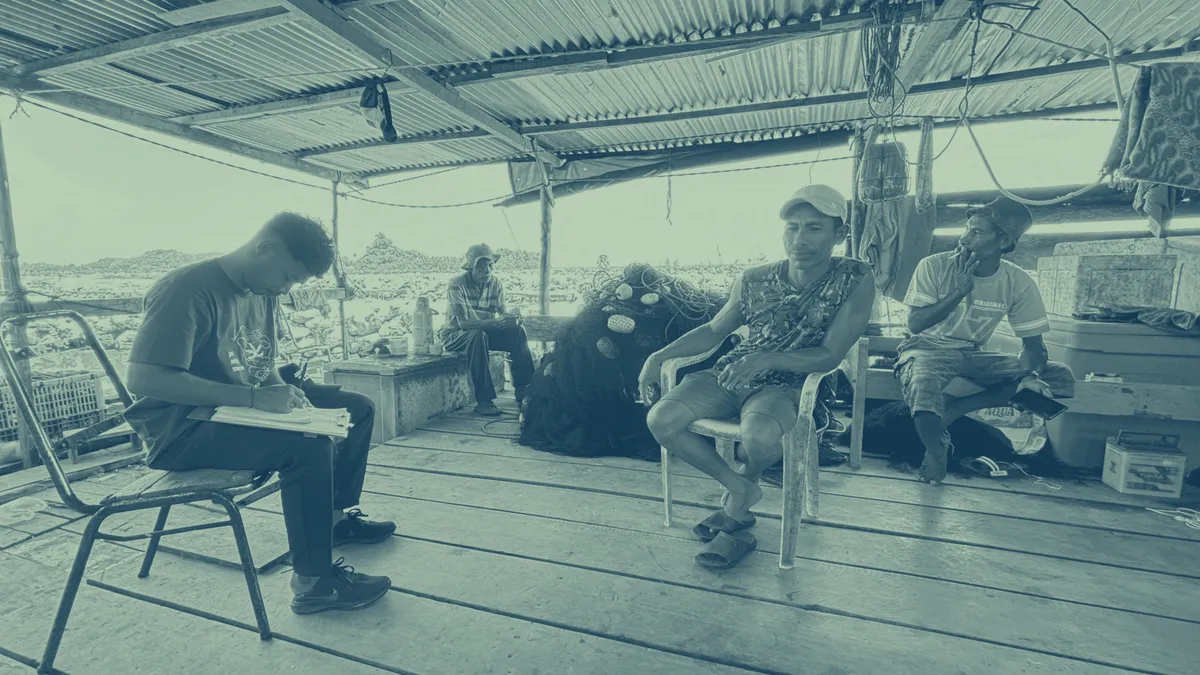
The interlocutors in this research are local government officials in Central Halmahera Regency and North Maluku Province. In their day-to-day work, they deal with issues related to development, public services, the environment, and communities living around mining areas. The issues explored through this PAR initiative are therefore not unfamiliar to them.
Yet field experience provides a different context. Outside their institutional routines and respective mandates, interlocutors hear directly from communities, observe the conditions they face, ask questions, and compare these experiences with what they have previously known.
One finding was relatively simple, but revealing. In one of the research locations, communities have to purchase up to 21 gallons of bottled water every two weeks for cooking and drinking, despite living in a region known for high economic growth.
The finding prompted a more fundamental question for the interlocutors: To what extent have government programmes addressed the needs of communities?
Basic service issues were not entirely unknown beforehand, nor were they the sole factor that raised the question. What changed was how the issue was understood. Through fieldwork, the interlocutors were invited to look beyond people’s choices or behaviour and consider how the issue was connected to the availability, accessibility, and delivery of basic services.
In PAR terms, this process can be understood as part of conscientisation: the process through which everyday experiences are critically re-examined, conditions that were previously taken for granted are questioned, and possibilities for different conditions begin to be imagined (Freire, 1977).

Data interpretation: Bringing separate bodies of knowledge together
As findings from the field began to be interpreted together, the boundaries between issues became increasingly difficult to separate.
One interlocutor, for example, was accustomed to going into the field to address waste-related issues. Through this research, they also encountered issues concerning land and village boundaries. Another interlocutor encountered health-related issues, including HIV/AIDS.
These findings show that issues in mining areas do not always follow the division of mandates between institutions. Health issues can be connected to social change. Environmental issues can intersect with housing conditions, basic services, and village governance. A single issue often requires knowledge from several institutions to be understood more fully.
This is where the interpretation space becomes important. Findings from one sector can be read alongside findings from another. Interlocutors can compare perspectives, identify the limitations of existing approaches, and recognise how the actions of one institution relate to those of another.
The experience also shows that participation cannot simply be understood as involving more people in a process. Different backgrounds and mandates become valuable when knowledge that was previously separated can be brought together and examined collectively.
In this sense, interpretation becomes part of the democratisation of knowledge. Interlocutors help determine how the data is understood and what is considered significant in the findings. Their role shifts towards that of co-researchers involved in producing knowledge about their own region.
Presenting findings: Giving voice to the knowledge they hold
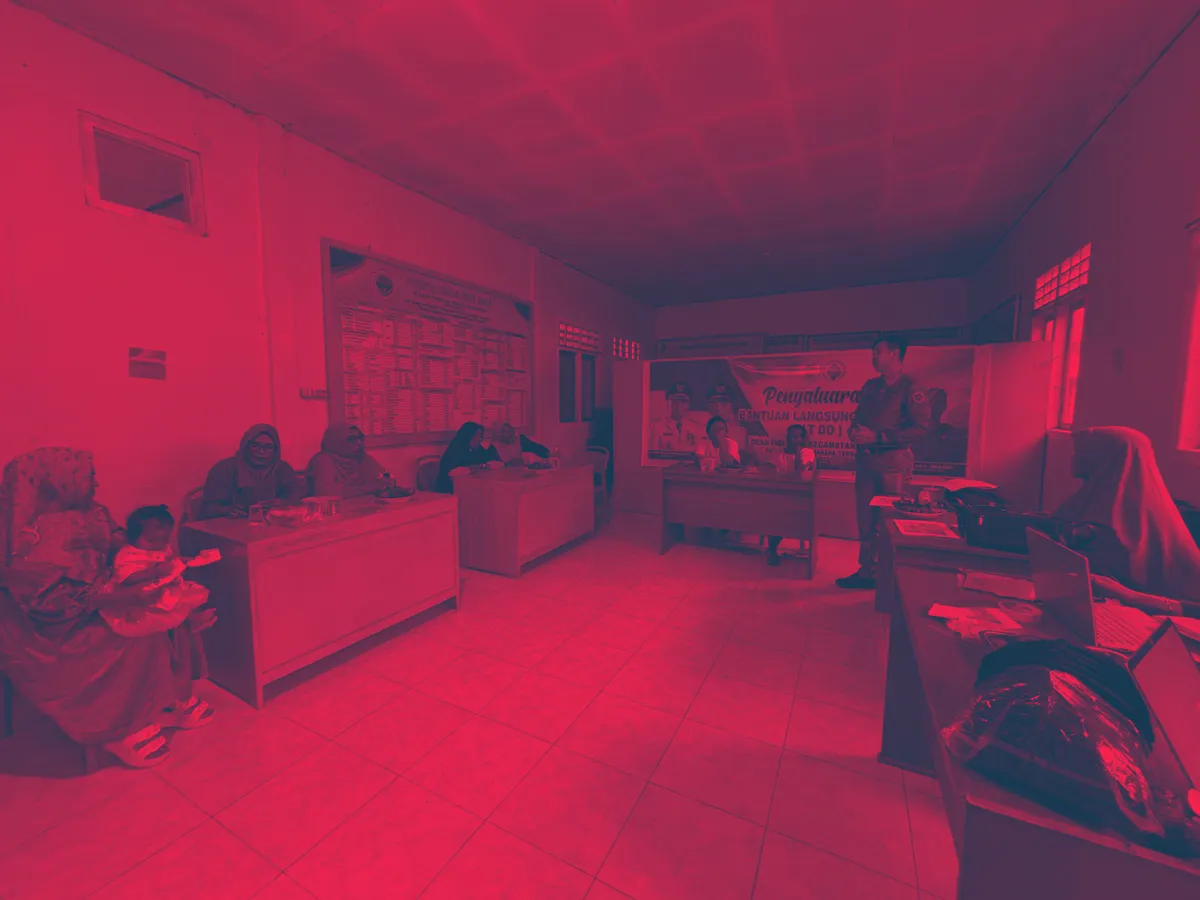
From the outset, interlocutors were involved through to the presentation of findings. After collecting and discussing the data, they revisited the findings, developed a narrative, and presented it to other participants.
This stage brought its own challenges. Some interlocutors expressed self-doubt. They needed to revisit the data they had collected, establish connections between findings, and develop explanations that could be presented to the forum. Among those present were also officials in more senior structural positions.
This context matters. Within a bureaucracy, position can shape who finds it easier to speak, lead a conversation, or take the floor. Similar dynamics were also visible in the level of participation among interlocutors throughout the research process.
For a time, the dissemination space created a different form of interaction. Interlocutors had the opportunity to present their findings and discuss them directly with officials who held higher structural positions. Through this experience, they began to see that they also had the capacity to take on a role they were not accustomed to playing.
This experience gives more concrete meaning to the idea of redistributing the authority of knowledge in PAR. Knowledge is not produced only by academics or researchers and then handed over to others. People who work within the realities being studied can also participate in producing, interpreting, and using knowledge (Fals-Borda & Rahman, 1991).
Looking back at the process as a whole, we learned that transformation in PAR may not immediately take the form of changes in policy or programmes. Before that happens, there is an earlier process of institutional learning.
One part of this can be seen in how knowledge moves through the bureaucracy, while also changing the relationship between experience, knowledge, and authority.
The movement may appear small. Yet it creates a possibility for a finding to become part of a broader institutional conversation.
References
- Freire, Paulo. 2010. “Interlude: From Pedagogy of the Oppressed.” In Brian D. Schultz (ed.), Listening to and Learning from Students: Possibilities for Teaching, Learning, and Curriculum. Emerald Publishing Limited.
- Fals-Borda, Orlando, and Muhammad Anisur Rahman, eds. 1991. Action and Knowledge: Breaking the Monopoly with Participatory Action Research. New York: Apex Press.
Comments
No comments yet. Be the first to respond.
Enter your email and we will send a sign-in link so you can comment.